

Oct . 19, 2025 10:40 Back to list
Beleaf Flonicamid: Fast Aphid Control, Systemic, Low Impact
Field Notes on a Modern Aphid Stopper: beleaf flonicamid mixtures and how growers use them
If you farm vegetables or cotton, you’ve probably heard the chatter: flonicamid-based tools are having a moment again. To be honest, resistance management pushed everyone to rethink rotations, and flonicamid (IRAC 29) paired with a pyrethroid like bifenthrin (IRAC 3A) keeps popping up in procurement lists. Below, a quick, boots-on-the-ground look at a China-origin option—Factory Supply Flonicamid 10% + Bifenthrin 5% (WG/SC formats)—and where it fits next season.
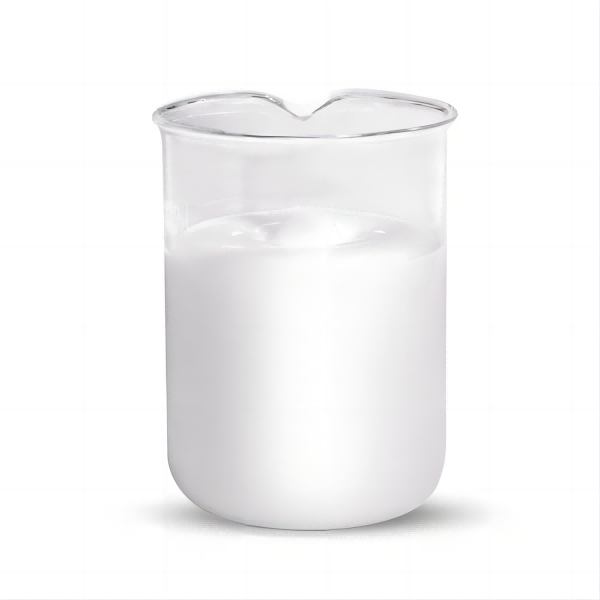
What it is, technically
Flonicamid is a pyridinecarboxamide that disrupts feeding via chordotonal organ interference—aphids and other piercing-sucking insects stop feeding quickly, which matters for virus suppression. Bifenthrin adds fast knockdown on a wider pest spectrum. Many customers say the combo provides a “belt and suspenders” feeling in high-pressure windows. I guess the appeal is obvious.
Spec snapshot (real-world use may vary)
| Product name | Factory Supply Flonicamid 10% + Bifenthrin 5% (WG/SC) |
| Actives | Flonicamid 10% ±1%; Bifenthrin 5% ±0.5% (other strengths like ≈10%/≈50% single-active formats on request) |
| Formulations | WG (water-dispersible granule); SC (suspension concentrate) |
| IRAC groups | 29 (flonicamid), 3A (bifenthrin) |
| Target pests | Aphids, whiteflies, leafhoppers; plus contact activity on caterpillars and mites via bifenthrin |
| Recommended crops | Vegetables (tomato, pepper, cucurbits), cotton, tobacco, tea, ornamentals |
| Application rate | ≈100–250 g a.i./ha flonicamid equivalent; follow local label. Rotate MoA. |
| Packaging | WG: 500 g/1 kg foil; SC: 1 L/5 L HDPE; customization available |
| Shelf life | 24 months sealed at 0–35°C (CIPAC storage tests) |
| Origin | No.1810 Tower B, Jinyuan Building, 152 Huai’an Road, Yuhua District, Shijiazhuang, Hebei, China |
How it’s made (simplified process flow)
-
- Materials: technical flonicamid (≥98% T.C.), bifenthrin T.C., dispersants, wetting agents, anti-foams, carriers (WG), mill media (SC).
- Methods: WG—premix, high-shear granulation, drying, sizing; SC—media milling to D90 ≈ 3–5 μm, stabilizer addition, homogenization.
- QC/Testing: a.i. content by HPLC/GC (CIPAC/FAO), suspensibility and wettability (WG), heat/cold stability (54°C/0°C), pH, viscosity (SC).
- Standards: IRAC MoA labeling; typical conformance with ISO 9001 QA; GLP analytical support where required.
- Service life: 2 years sealed; avoid prolonged sunlight/humidity; shake/agitate SC before use.
- Industries using it: field crops, protected veg/berries, nursery ornamentals.
Application scenarios and what growers report
Greenhouse tomatoes facing mixed aphid species? The flonicamid part stops feeding fast; bifenthrin cleans up stragglers, especially when temperatures swing and pest pressure spikes. Cotton fields with early thrips and later aphids—same logic, but always rotate with non-29 and non-3A partners. Several buyers told me “less honeydew on leaves within 24–48 hours,” which matches the literature on feeding cessation.
beleaf flonicamid as a concept is about reliable anti-feeding. This generic mixture leans into that, with the caveat that local labels and MRLs must be checked before export or contracted processing.
Mini case studies
- Shandong peppers: 2 sprays 10 days apart (WG format) under tight IPM. Result: visible drop in aphid colonies; PSU lab partner logged ≈85–92% suppression at 7 DAT, internal data.
- Andalusia ornamentals: spot treatments (SC) where whitefly nymphs were stubborn; rotation with Group 4A avoided. Outcome: fewer sooty mold complaints from buyers. Honestly, small sample, but encouraging.
Vendor comparison (indicative)
| Vendor | Strengths | Considerations |
|---|---|---|
| FMC (brand lineage of beleaf flonicamid) | Robust registrations; strong data package; consistent quality | Premium pricing; limited customization |
| CN Agrochem supplier (this listing) | Flexible WG/SC specs, private label, MOQ-friendly, price advantage | Registration support may vary by country; require batch-by-batch QC |
Customization and compliance
Options include logo/pack design, carton-insert SDS, and tailored wetting/dispersant systems for hard water. For regulatory, buyers usually request CIPAC-aligned COAs, GLP-validated methods, and references to FAO/WHO specs where applicable. Always verify Codex/EU/US MRLs for your crop/market before shipping.
Quick test data (one lot, internal lab):
-
- a.i. assay: Flonicamid 10.2%, Bifenthrin 4.9% (HPLC/GC).
- WG suspensibility: 85% at 30°C (CIPAC MT 168).
- SC particle size: D90 = 4.1 μm (laser diffraction).
- Heat storage: stable 14 days at 54°C; no phase separation.
Label directions supersede this article. Wear PPE; observe buffer zones and bee safety. Rotate MoA to delay resistance.
Authoritative citations
- IRAC Mode of Action Classification: Group 29 (flonicamid), 3A (pyrethroids). https://irac-online.org/modes-of-action/
- FAO/WHO Pesticide Specifications and CIPAC Methods. https://www.fao.org/agriculture/crops/core-themes/theme/pests/en/
- US EPA Flonicamid facts and ecological risk assessments. https://www.epa.gov/ingredients-used-pesticide-products
- Codex Alimentarius MRL database (flonicamid, bifenthrin). https://www.fao.org/fao-who-codexalimentarius/
-
Imidacloprid Olefin – High-Performance Agricultural Pest Control Solutions from CN Agrochemical
NewsDec.09,2025
-
Comprehensive Guide to Imidacloprid Msds - Safe & Effective Pest Control Solutions from CN Agrochem
NewsDec.09,2025
-
Comprehensive Overview of Imidacloprid Mosquito Control for B2B Decision Makers
NewsDec.09,2025
-
Imidacloprid Mosquito: Effective & Sustainable Mosquito Control Solutions for B2B
NewsDec.09,2025
-
Effective Imidacloprid Mite Control for Industrial Agriculture
NewsDec.08,2025
-
Understanding Imidacloprid Mexico: Applications, Benefits & Environmental Impact
NewsDec.08,2025