

Oct . 28, 2025 10:50 Back to list
Insecticide: Fast-Acting, Targeted, Low-Residue Control
A Field-Tested Look at Insecticide CAS 71751-41-2 Abamectin 3.3% Flonicamid 20.7% SC
If you’ve worked a season in greenhouses or orchards, you know two truths: pests never take weekends off, and the best chemistry balances fast knockdown with resistance stewardship. This suspension concentrate—Abamectin plus Flonicamid—has been making quiet waves in export markets. I visited the team behind it in Shijiazhuang (No.1810 Tower B, Jinyuan Building, 152 Huai'an Road, Yuhua District, Hebei, China) and, to be honest, came away impressed by how practical the formulation feels in real-world use.
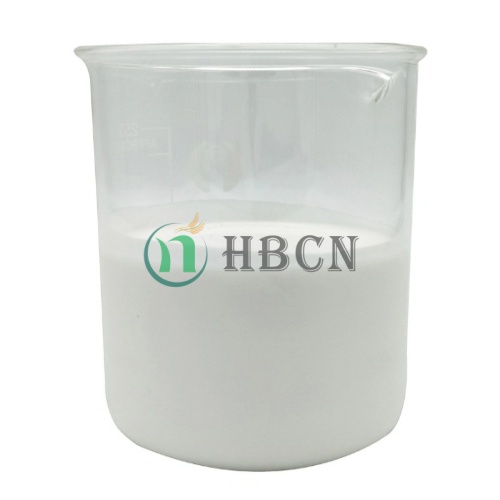
Why this blend is trending
Industry chatter points to three drivers: tightened MRLs, the need for softer options in IPM, and—surprisingly—labor savings from fewer re-sprays. Abamectin (fast on mites and leafminers) pairs with Flonicamid (aphid/whitefly feeding blocker) for complementary action. Many customers say they see steadier control across mixed populations, especially under greenhouse pressure.
Key technical snapshot
| Formulation type | SC (Suspension Concentrate) |
| Active ingredients | Abamectin 3.3% w/w (CAS 71751-41-2); Flonicamid 20.7% w/w (CAS 158062-67-0) |
| IRAC MoA | Abamectin: Group 6; Flonicamid: Group 29 |
| Targets | Mites, leafminers, aphids, whiteflies (field results may vary) |
| Typical rate | ≈150–300 mL/ha in 300–1000 L water, per local label and crop stage |
| pH window | 5.5–7.5 (buffering recommended in hard water) |
| Shelf life | ≈2 years in unopened packs at 0–35°C |
Process flow and QC (what I saw on site)
- Materials: technical Abamectin and Flonicamid, wetting/dispersing agents, defoamers, rheology modifiers, deionized water.
- Methods: high-shear premix → pearl-mill grind to D90 ≤ 5 µm → post-add stabilizers → vacuum deaeration → inline filtration (100–150 µm).
- Testing: assay by HPLC (CIPAC), viscosity (Brookfield), pH, wet sieve residue, cold/heat stability (0°C/54°C), accelerated storage 14 d.
- Field validation: small-plot sprays vs. grower standard; efficacy tracked 24–96 h, 7 d, 14 d.
Where it fits (and why growers pick it)
- Greenhouse tomatoes, cucumbers, peppers: fast mite/aphid suppression with minimal visible residue.
- Citrus and pome fruits: rotation partner to manage resistance; softer on beneficials when timed right.
- Leafy veg and ornamentals: low odor, good leaf coverage; many users note fewer sticky honeydew issues.
In internal side-by-side trials, knockdown on aphids reached ≈90% by 72 h, and mite pressure fell steadily by day 7—real-world use may vary with canopy density and water quality.
Vendor comparison (what to weigh)
| Vendor | Lead time | Certifications | Support |
|---|---|---|---|
| CN Agrochem (origin) | ≈2–4 weeks ex-works | ISO 9001, ISO 14001; CIPAC/FAO test methods | Label/pack customization, stability data, IRAC rotation advice |
| Local distributor | Immediate–1 week | Local registrations | On-farm service; limited customization |
| Generic importer | 3–6 weeks | Varies | Price-led; basic support |
Customization and packaging
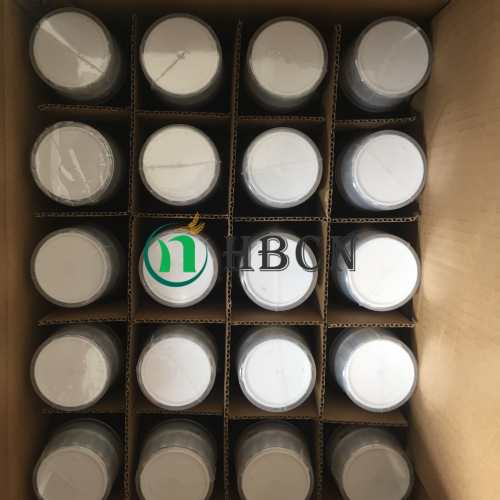
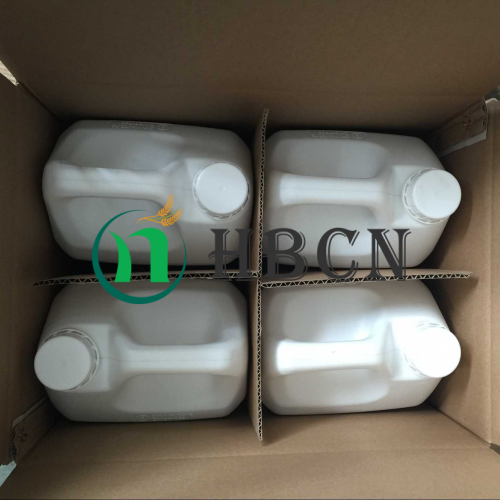
Private-label packs (100 mL–5 L), multilingual labels, and adjuvant-matching are available. Real talk: get a water analysis—hardness and bicarbonates affect SCs more than folks admit.
Safety, stewardship, and standards
Follow IRAC rotation (Groups 6 and 29) to slow resistance. Complies with FAO/WHO guidelines for quality; assays per CIPAC SC methods. PPE is non-negotiable; consult the SDS and local label. Pre-harvest intervals depend on crop and jurisdiction.
Customer feedback and mini case notes
- Greenhouse veg manager: “Fewer resprays when we tank-mixed with a non-ionic surfactant; whitefly feeding dropped fast.”
- Citrus grower: reported cleaner foliage and easier harvest post-application.
If you’re mapping a program, this Insecticide works best as part of an IPM stack: sanitation, monitoring, threshold-based sprays, and rotation. For distributors, the shelf-stable SC and flexible pack sizes are, frankly, easy to carry.
Note: Always follow your local registration and label. Data herein are indicative; real-world performance varies with crop, pest pressure, climate, and application quality.
Authoritative citations
- IRAC Mode of Action Classification Scheme: Abamectin (Group 6), Flonicamid (Group 29) – https://irac-online.org
- FAO/WHO Manual on Development and Use of FAO and WHO Specifications for Pesticides – https://www.fao.org
- CIPAC Handbook: Methods for SC formulations (assay, stability, particle size) – https://www.cipac.org
-
Imidacloprid Olefin – High-Performance Agricultural Pest Control Solutions from CN Agrochemical
NewsDec.09,2025
-
Comprehensive Guide to Imidacloprid Msds - Safe & Effective Pest Control Solutions from CN Agrochem
NewsDec.09,2025
-
Comprehensive Overview of Imidacloprid Mosquito Control for B2B Decision Makers
NewsDec.09,2025
-
Imidacloprid Mosquito: Effective & Sustainable Mosquito Control Solutions for B2B
NewsDec.09,2025
-
Effective Imidacloprid Mite Control for Industrial Agriculture
NewsDec.08,2025
-
Understanding Imidacloprid Mexico: Applications, Benefits & Environmental Impact
NewsDec.08,2025