

Oct . 09, 2025 08:40 Back to list
Topramezone Herbicide: Fast, Selective Weed Control?
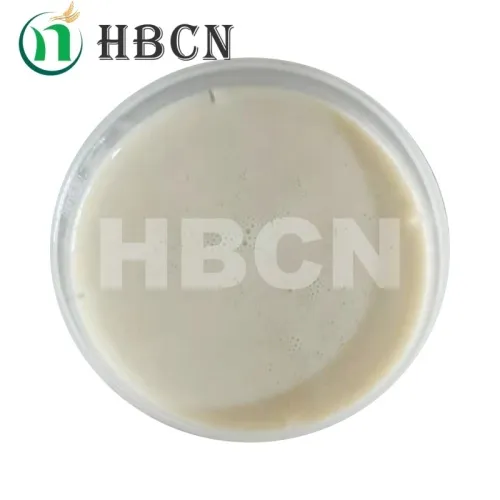
Topramezone Atrazine MCPA-isooctyl: a pragmatic field look at modern corn herbicides
If you’ve wrestled with late flushes of pigweed, lambsquarters, or volunteer grasses in maize, you already know why topramezone-based mixes keep showing up in agronomy chats. This particular formulation—Topramezone 2% + Atrazine 25% + MCPA-isooctyl 15% OD—comes out of Yuhua District, Shijiazhuang, Hebei, China, and, to be honest, it’s been getting steady attention because it balances three modes of action without being fussy to spray.
Industry trend: stacking modes of action (with a twist)
Resistance is the headline. The three-way stack here hits HPPD inhibition via topramezone, PSII inhibition via atrazine, and auxinic action via MCPA-isooctyl. In fact, agronomists like the OD (oil dispersion) formulation because it tends to wet waxy leaf surfaces better than SCs, especially under low humidity. And yes, some bleaching from topramezone can happen, but in maize it typically resolves quickly.
How it’s built: actives, methods, and QC
- Actives: topramezone (2%), atrazine (25%), MCPA-isooctyl (15%), in an OD system with refined oils and surfactants.
- Process: high-shear milling (target D50 ≈ 2–4 μm), emulsifier balancing, anti-settling package, then stability cycling (-5°C to 54°C).
- QC & testing: CIPAC methods (e.g., MT 36 pH, MT 46 suspensibility, MT 47 persistent foam, MT 160 wet sieve); accelerated storage 54°C/14 days; cold stability at -5°C.
Specification snapshot
| Formulation type | OD (Oil Dispersion) |
| Active content | topramezone 2% + atrazine 25% + MCPA-isooctyl 15% (w/w) |
| Density (20°C) | ≈ 1.02–1.08 g/mL |
| Viscosity | ≈ 200–500 mPa·s (real-world may vary) |
| Particle size | D50 ≈ 2–4 μm; D90 < 10 μm |
| Storage stability | Passes -5°C and 54°C tests (no phase separation per CIPAC) |
| Shelf life | 24 months unopened, cool/dry |
Use-case notes from the field
Post-emergence in maize/corn, V2–V6 is the sweet spot. Typical rate: ≈ 0.8–1.2 L/ha in 200–300 L/ha water; adjust for weed size and local label. Targets include pigweed, lambsquarters, velvetleaf, cocklebur, some barnyardgrass and foxtails. Many customers say early, even coverage reduces the need for follow-ups.
Minor crop response (bleaching) from topramezone can occur; it usually fades. Always check tank-mix compatibilities (AMS, NIS/MSO) and follow your country’s label. Drift control is non-negotiable—MCPA ester can be lively in warm, breezy conditions.
Vendor landscape (quick comparison)
| Supplier | Quality & Specs | Certs | Lead Time | Customization |
|---|---|---|---|---|
| CN Agrochem (Hebei) | CIPAC-driven QC; tight OD milling | ISO 9001/14001; ICAMA | ≈ 2–4 weeks | Label, pack, actives ratio |
| Global Generic A | Solid; sometimes SC variant | ISO; GLP network | 3–6 weeks | Moderate |
| Regional Blender B | Variable batch-to-batch | Local permits | 1–3 weeks | High, if volume |
Customization and documentation
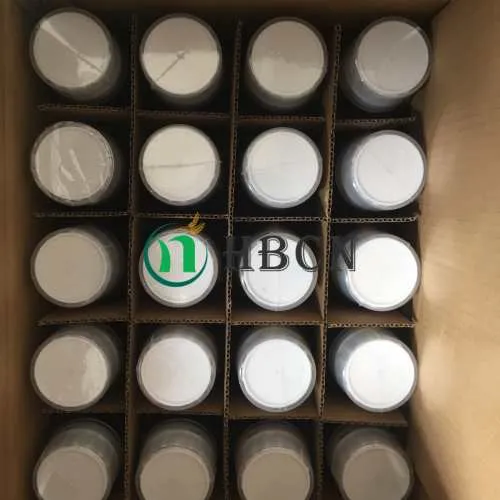
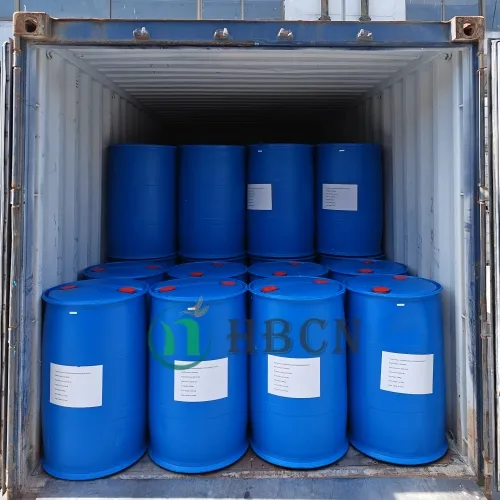
- Packaging: 1–20 L HDPE; export cartons with UN spec where needed.
- Labeling: multilingual, crop-specific resistance messaging (HPPD + PSII + 4).
- Dossier support: COA, SDS (GHS), field bioassay summaries, OECD GLP tox excerpts.
Field snippets and performance
Hebei maize, 2024: OD held coverage in a dry spell; 90%+ control on Amaranthus at 3–5 cm, negligible crop injury by 10 DAT. Eastern Europe co-op: mixing with soil-applied residuals cut late escapes; operators liked the “less dusty” handling vs. WPs. It seems that the oil system quietly pulls its weight.
Safety, stewardship, and life cycle
Follow PPE; avoid drift to broadleaf crops. Observe buffer zones and local atrazine caps. Waste handling per national regs (often UN 3082, Class 9). Service life: ≈ 24 months sealed; always agitate before use—ODs prefer a good shake.
Citations
- FAO/WHO Pesticide Specifications; CIPAC Methods MT 36, MT 46, MT 47, MT 160.
- WSSA Herbicide Grouping: HPPD inhibitors (Group 27), PSII (Group 5), Synthetic Auxins (Group 4).
- OECD Test Guidelines for agrochemical evaluation (GLP framework, e.g., TG 404/405).
- US EPA/EFSA public assessments on topramezone and atrazine mixtures.
- Manufacturer field QC and accelerated storage data; SDS/COA on request.
-
Imidacloprid Olefin – High-Performance Agricultural Pest Control Solutions from CN Agrochemical
NewsDec.09,2025
-
Comprehensive Guide to Imidacloprid Msds - Safe & Effective Pest Control Solutions from CN Agrochem
NewsDec.09,2025
-
Comprehensive Overview of Imidacloprid Mosquito Control for B2B Decision Makers
NewsDec.09,2025
-
Imidacloprid Mosquito: Effective & Sustainable Mosquito Control Solutions for B2B
NewsDec.09,2025
-
Effective Imidacloprid Mite Control for Industrial Agriculture
NewsDec.08,2025
-
Understanding Imidacloprid Mexico: Applications, Benefits & Environmental Impact
NewsDec.08,2025