

Oct . 07, 2025 07:35 Back to list
Bentazone Herbicide for Fast, Selective Broadleaf Control?
Field Notes on a Workhorse: bentazone herbicide at 480 g/L SL
I’ve walked enough fields to know a reliable post-emergence contact product when I see one. This 480 g/L SL from Shijiazhuang (Origin: No.1810 Tower B, Jinyuan Building, 152 Huai'an Road, Yuhua District, Shijiazhuang City, Hebei Province, China) has been making the rounds with co-ops. In fact, growers keep telling me it “just browns the broadleaves fast,” which is what you want in beans, rice, and peanuts when timing is tight.
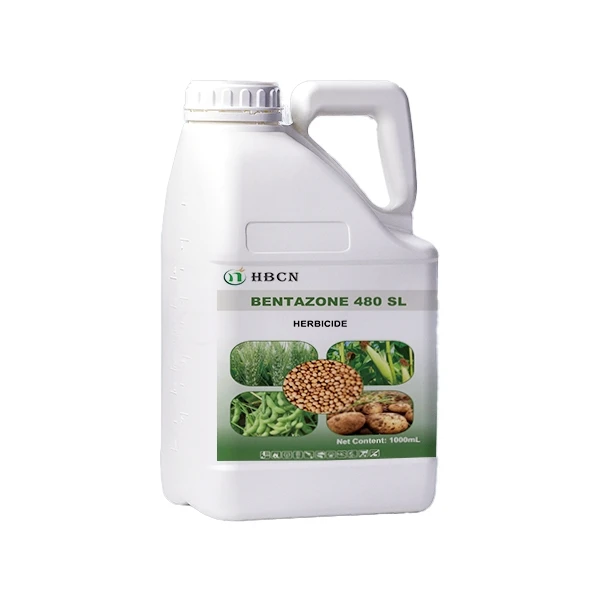
What it is—and what it isn’t
This is Bentazone 480 g/L SL (water-based soluble liquid). Mode of action: photosystem II inhibitor, HRAC/WSSA Group 6. It’s a contact herbicide with minimal translocation—great on sedges and many broadleaf weeds; not your go-to for grasses. To be honest, that clarity matters when you’re writing tank mixes or resistance rotations.
Quick product specs
| Product name | Bentazone 480 g/L SL (Crop Protection Products) |
| Active ingredient | Bentazone (often as sodium salt), 480 g/L |
| MoA | PSII inhibitor, Group 6 (contact) |
| Target spectrum | Broadleaf weeds and sedges (e.g., Amaranthus spp., Chenopodium spp., Cyperus spp.) |
| Use rate (field) | ≈0.6–1.6 kg a.i./ha (real-world use may vary by crop/label) |
| Spray volume | ~200–300 L/ha for good coverage |
| Shelf life | Typically 2 years in unopened HDPE |
| Certs (typical) | ISO 9001/14001 manufacturing; GLP lab testing data available |
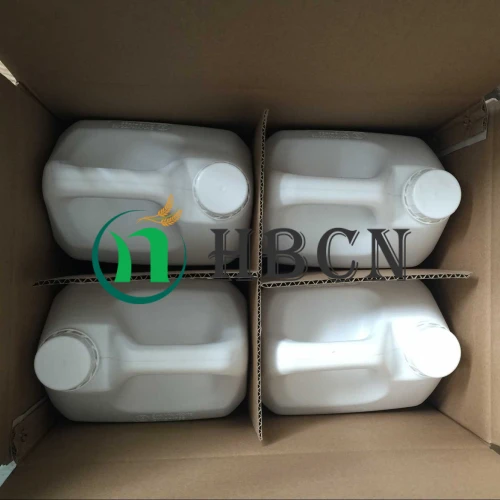
How it’s made and verified (process flow)
Materials: Bentazone technical (≥95% a.i.), deionized water, neutralizing agent (for salt form), solvents/co-solvents as needed, non-ionic/anionic surfactants, antifoam.
Methods: Neutralization and dissolution → controlled blending → filtration at 5–25 μm → inline conductivity/pH checks → HDPE filling with nitrogen headspace.
Testing standards: Active content by HPLC/UV per CIPAC methods; pH and density; storage stability at 0°C and 54°C (14 days) to WHO/FAO SL specs; wetting/foaming profiles; container111 compatibility (HDPE).
Service life: validated to ≈24 months; accelerated tests correlate with ambient holds in typical warehouses (I’ve seen data hold up in hot coastal depots too, surprisingly).
Application scenarios and tips
- Post-emergence in soybean, rice (paddy), peanuts, peas, clover; crop selectivity via rapid metabolism.
- Best on small, actively growing weeds. Coverage is king; flat-fan nozzles, medium droplets.
- Tank mixes: often paired with MCPA or bentazon partners for spectrum; heed local labels.
- Resistance management: rotate MoA; Group 6 shouldn’t carry the whole season by itself.
Many customers say bentazone herbicide “shows in 24–48 hours,” which aligns with contact burn. In rice, timing around tillering—watch sedge stage—can be the difference between clean paddies and a season of regret.
Vendor snapshot (real-world considerations)
| Vendor | Strengths | Potential gaps |
|---|---|---|
| CN Agrochem (Shijiazhuang) | Consistent assay data, flexible packaging (1–200 L), OEM labels, competitive lead time | MOQ on custom blends; shipping schedules around peak season |
| Generic regional distributor | Local stock; rapid delivery; credit terms | Variable formulation lineage; limited QC transparency |
| European brand house | Robust stewardship; detailed labels and trials | Premium pricing; sometimes lower availability off-season |
Customization and documentation
Labels and packs (1 L, 5 L, 20 L drums; 200 L on request), adjuvant tuning for hard water, and sodium-salt vs. mixed-solvent profiles can be arranged. COAs, full HPLC chromatograms, MSDS, and FAO/WHO spec conformity statements are typically provided. If you need OECD GLP residue reports for regulatory submissions, ask early.
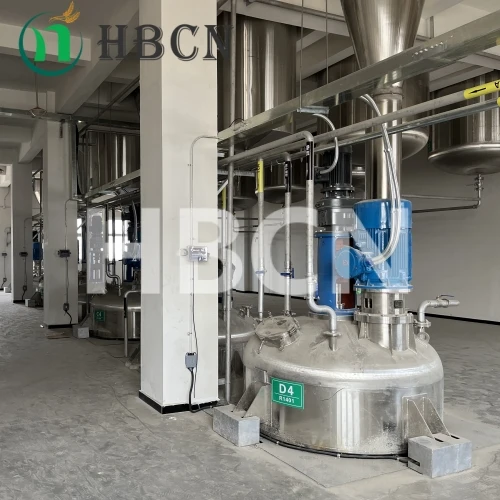
Field data and feedback
In side-by-side strips (n=6 sites, beans and rice), control of small sedges averaged ≈88–93% at 10–14 DAT with bentazone herbicide alone; mixes nudged that over 95%. Crop safety was good when labels were followed. One caveat: hot, dry afternoons can spike phytotoxic speckling—spray mornings if possible.
Industry trendline
Demand for Group 6 tools is quietly rising as growers diversify MoA rotations. Actually, it seems that stewardship programs now reward contact herbicides like bentazone herbicide for resistance breaks, especially in sedge-prone paddies.
Authoritative standards and references
- FAO/WHO Specification for Bentazone (TC/SL), latest revision.
- HRAC Mode of Action Classification, Group 6 (PSII inhibitors).
- OECD Principles of GLP; CIPAC Handbook methods for bentazone analysis.
- US EPA Bentazon Fact Sheet; label-specific directions by crop and region.
-
Imidacloprid Olefin – High-Performance Agricultural Pest Control Solutions from CN Agrochemical
NewsDec.09,2025
-
Comprehensive Guide to Imidacloprid Msds - Safe & Effective Pest Control Solutions from CN Agrochem
NewsDec.09,2025
-
Comprehensive Overview of Imidacloprid Mosquito Control for B2B Decision Makers
NewsDec.09,2025
-
Imidacloprid Mosquito: Effective & Sustainable Mosquito Control Solutions for B2B
NewsDec.09,2025
-
Effective Imidacloprid Mite Control for Industrial Agriculture
NewsDec.08,2025
-
Understanding Imidacloprid Mexico: Applications, Benefits & Environmental Impact
NewsDec.08,2025