

Oct . 12, 2025 09:15 Back to list
Best EPA Boscalid | High-Purity, Reliable Disease Control
A Practical Insider’s Take on the best epa boscalid Options in 2025
If you work in crop protection, you already know the market moves fast—labels evolve, weather doesn’t cooperate, and buyers want residue-compliant produce yesterday. For teams comparing boscalid sources, the best epa boscalid conversation now revolves around technical rigor, reliable QC, and real registration support, not just price tags.
Product at a Glance
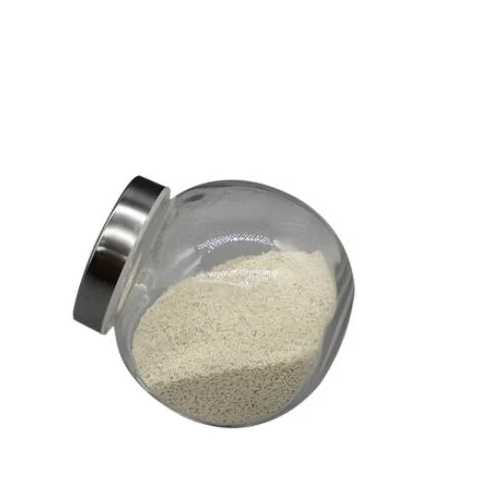
Factory Supply Agrochemicals Boscalid fungicide 50% WDG/WGD, 98% TC, 30% SC (Origin: No.1810 Tower B, Jinyuan Building, 152 Huai'an Road, Yuhua District, Shijiazhuang City, Hebei Province, China). It’s a carboxamide (SDHI) fungicide targeting Botrytis, Alternaria, and Sclerotinia in grapes, berries, vegetables, and oilseed, among others. In fact, many customers say the SC holds suspension nicely in real-world storage—more on that below.
| Spec | Details (≈ values; real-world use may vary) |
|---|---|
| Active | Boscalid (CAS 188425-85-6), SDHI, C18H12Cl2N2O |
| Formulations | 98% TC; 50% WDG/WGD; 30% SC |
| Purity (TC) | ≥ 98.0% (HPLC, CIPAC-aligned methods) |
| MoA | Inhibits succinate dehydrogenase (Complex II) |
| Solubility / LogP | Water ≈ 4–5 mg/L (20°C); logP ≈ 2.9 |
| Shelf life | 24–36 months sealed, cool/dry storage |
| Typical rate | ≈ 200–400 g a.i./ha (follow local label) |
Process Flow, Methods, and Testing
Materials: high-purity TC, dispersants/wetting agents (WDG/WGD), defoamers/suspending aids (SC). Methods: controlled milling and granulation (WDG), bead-mill dispersion and letdown (SC), in-process HPLC checks. Testing standards referenced: CIPAC (e.g., MT 46.3 suspensibility, MT 187 particle size), FAO/WHO specs alignment, stability (accelerated/ambient), and GLP/ISO/IEC 17025 labs for 5-batch analysis when needed.
Service life: batches are trended via retained-sample programs; WDG dusting and caking are monitored quarterly. Industries served: open-field horticulture, greenhouse veg, fruit packing programs (for residue compliance), and seed/row-crop rotations against sclerotinia pressure.
EPA-Facing Readiness and Documentation
- Chemistry data package support (EPA 830 series), CSF, impurity profile with toxicological significance assessed.
- 5-batch analysis under GLP; analytical methods transferable to third-party labs.
- Labels/SDS aligned to US and key export markets; OECD TG used where applicable.
That’s why teams shortlisting the best epa boscalid source ask about method validation and reference standards before they ask about price. Sensible.
Vendor Comparison (What Buyers Actually Check)
| Criterion | CNAgrochem | Vendor X | Vendor Y |
|---|---|---|---|
| Purity consistency | ≥98% TC; 5-batch data available | ≈97–98% | ≈96–98% |
| EPA dossier help | Yes (GLP partners) | Partial | On request |
| Lead time | ≈2–4 weeks ex-works | ≈4–6 weeks | Variable |
| Customization | WDG size curves, SC viscosity windows | Limited | Moderate |
Customization and Packaging
Options include 1 kg foil bags (WDG), 25 kg fiber drums (TC), and 5–200 L HDPE (SC). Particle-size targets for WDG can be tuned for specific spray rigs; SC rheology can be set for low-temperature stability. To be honest, that detail saves headaches during audits.
Real-World Use and Feedback
Growers report clean Botrytis control in grapes when rotated with non-SDHI modes. A retailer in the EU told me the WDG pours “low-dust” compared with last season’s lot—small thing, big day. As always, follow local labels and resistance-management guidelines.
Mini Case Study
A Latin American greenhouse program swapped an older SC for this boscalid 30% SC. After tweaking viscosity to ~600–900 mPa·s at 25°C and confirming MT 46.3 suspensibility ≥70%, they saw fewer filter clogs and steadier deposits. Residue checks stayed within MRLs in export markets—surprisingly smooth season.
If you’re choosing the best epa boscalid supplier, prioritize validated methods, 5-batch data, and flexibility on granulation/rheology. That’s the quiet stuff that prevents loud problems.
Certifications and Standards Touchpoints
- ISO 9001/14001/45001 for QHSE (vendor dependent)
- CIPAC methods for formulation QC; FAO/WHO specifications alignment
- EPA registration data support; OECD Test Guidelines; ISO/IEC 17025 labs
Bottom line: picking the best epa boscalid isn’t just about an assay number. It’s about who stands behind that number when the auditor walks in.
Authoritative citations
- US EPA. Boscalid – Pesticide information and regulatory resources. https://www.epa.gov/ingredients-used-pesticide-products/boscalid
- FAO/WHO JMPR Evaluations: Boscalid (toxicology and residues). https://www.fao.org
- CIPAC Methods (Formulation analysis and physical tests). https://www.cipac.org/
- OECD Test Guidelines for Chemicals (GLP/aligned methods). https://www.oecd-ilibrary.org/environment/oecd-guidelines-for-the-testing-of-chemicals_chem_guide_pkg-en
-
Imidacloprid Olefin – High-Performance Agricultural Pest Control Solutions from CN Agrochemical
NewsDec.09,2025
-
Comprehensive Guide to Imidacloprid Msds - Safe & Effective Pest Control Solutions from CN Agrochem
NewsDec.09,2025
-
Comprehensive Overview of Imidacloprid Mosquito Control for B2B Decision Makers
NewsDec.09,2025
-
Imidacloprid Mosquito: Effective & Sustainable Mosquito Control Solutions for B2B
NewsDec.09,2025
-
Effective Imidacloprid Mite Control for Industrial Agriculture
NewsDec.08,2025
-
Understanding Imidacloprid Mexico: Applications, Benefits & Environmental Impact
NewsDec.08,2025