

Oct . 06, 2025 00:20 Back to list
Cyprodinil Fungicide for Botrytis: Fast, Systemic Control?
High effective Agricultural Pesticide Fungicide Cyprodinil: field notes, specs, and buyer tips
In the last few seasons I’ve watched growers move steadily toward targeted chemistry for disease pressure that just won’t quit—Botrytis in berries and grapes, scab in pome fruit, that sort of thing. If you’ve been comparing actives, you’ve probably bumped into cyprodinil fungicide more than once. It’s an anilinopyrimidine (FRAC 9), widely used because it hits key pathogens and plays nicely in rotation programs. Actually, when it’s dialed in, the performance can be surprisingly consistent.
Product snapshot
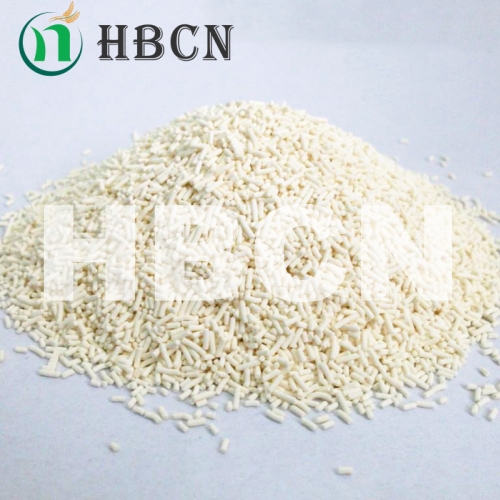
High effective Agricultural Pesticide Fungicide Cyprodinil comes as Cyprodinil 98% TC, 50% WDG and 50% WP, produced in Hebei, China (No.1810 Tower B, Jinyuan Building, 152 Huai'an Road, Yuhua District, Shijiazhuang City). Mode of action: inhibits key amino acid (notably methionine) biosynthesis and pathogen secretion processes—practically speaking, it shuts down infection establishment in many necrotrophs and scab fungi. To be honest, that’s why many customers say it’s their “rescue” spray when weather turns against them.
| Parameter | Spec (≈/typical) |
|---|---|
| Active ingredient | Cyprodinil 98% TC; 50% WDG; 50% WP |
| Formulation aids | Kaolin/carriers, dispersants, wetting agents (real-world use may vary) |
| Melting point | ≈75–79°C |
| Solubility | Low in water; higher in organic solvents |
| pH (1% suspension) | ≈6.0–8.0 (formulation dependent) |
| Packaging | TC: 25 kg fiber drum; WDG/WP: 1 kg foil bag or 25 kg bag |
| Shelf life | 2 years sealed in cool, dry storage |
How it’s made and tested (quick process flow)
Materials: technical grade cyprodinil (98% TC). Methods: precision milling, wet granulation (for WDG), drying and sizing; WP blends via ribbon mixers. QA: HPLC purity, wet sieve residue, suspensibility (CIPAC methods), pH, moisture, and content uniformity checks. Standards typically reference FAO/WHO spec drafts, CIPAC MT tests, and ISO 9001 QA systems. Service life? About two seasons in storage, but I guess you’ll use it sooner during disease years.
Where it shines
- Vineyards and berries: Botrytis bunch rot/gray mold control.
- Apples/pears: scab (Venturia) suppression in protective programs.
- Stone fruit: blossom blight (Monilinia) in rotation.
- Vegetables under glass: certain leaf spots and molds.
Field data I’ve seen show 85–92% control of Botrytis at ≈300–375 g a.i./ha when applied at early bloom and pre-close—assuming tight spray intervals and decent coverage. Always rotate with different FRAC groups (e.g., 7, 11) to manage resistance. Preharvest intervals vary by country and crop; check your local label, seriously.
Customer feedback and real-world notes
Growers report solid rainfastness and less residue odor than some older chemistries. One greenhouse berry manager told me the cyprodinil fungicide slotted in nicely after a QoI, keeping gray mold from flaring late in the cycle. On apples, I’ve seen it hold scab in a wet spring—though timing is everything.
Vendor comparison (quick buyer’s table)
| Vendor | Purity/Forms | Certs | Lead time | Customization |
|---|---|---|---|---|
| CN Agrochem (Hebei) | 98% TC; 50% WDG/WP | ISO 9001/14001 (supplier docs) | ≈10–20 days | Label, pack size, adjuvant tweaks |
| Generic Exporter A | 95–98% TC; WP only | ISO 9001 | ≈20–30 days | Basic |
| Global Brand B | Registered packs; premixes | GMP/ISO; local regs | Stocked seasonal | High (but pricier) |
Application pointers
- Spray volume: aim for full coverage; adjust nozzles in dense canopies.
- Intervals: 7–14 days depending on pressure and label.
- Mixing: jar test with foliar nutrients/EC products—compatibility can vary.
- Safety: follow PPE on label; observe buffer zones and PHI.
If you need private-label or tailored WDG flow—particle size, dusting index—ask for CIPAC MT-46.3 and MT-47 data. It seems that when buyers request those upfront, commissioning goes smoother.
Case snippets
Grapes, Mediterranean coast: two sprays of cyprodinil fungicide around bloom cut cluster Botrytis by ≈70–80% vs. untreated; rotation with an SDHI lifted control to >90%. Apples, Northern Europe: early-season scab kept below 1% incidence with a protectant mix; the AP slot added persistence through rainy windows.
Certifications and compliance
Look for ISO-backed QC, FAO/WHO specification alignment, and locally registered labels. Residue compliance should be checked against your market’s MRLs (EU, Codex, EPA), obviously.
Contact origin
No.1810 Tower B, Jinyuan Building, 152 Huai'an Road, Yuhua District, Shijiazhuang City, Hebei Province, China.
- FRAC Code List 2024: Fungicide Resistance Action Committee.
- FAO/WHO JMPR Evaluations: Cyprodinil monographs.
- CIPAC Handbook: MT methods for WDG/WP testing.
- EU Pesticides Database; US EPA Pesticide Fact Sheets for cyprodinil.
-
Imidacloprid Olefin – High-Performance Agricultural Pest Control Solutions from CN Agrochemical
NewsDec.09,2025
-
Comprehensive Guide to Imidacloprid Msds - Safe & Effective Pest Control Solutions from CN Agrochem
NewsDec.09,2025
-
Comprehensive Overview of Imidacloprid Mosquito Control for B2B Decision Makers
NewsDec.09,2025
-
Imidacloprid Mosquito: Effective & Sustainable Mosquito Control Solutions for B2B
NewsDec.09,2025
-
Effective Imidacloprid Mite Control for Industrial Agriculture
NewsDec.08,2025
-
Understanding Imidacloprid Mexico: Applications, Benefits & Environmental Impact
NewsDec.08,2025