

Sep . 30, 2025 09:35 Back to list
Fluoxastrobin Fungicide—Broad-Spectrum QoI, Long Residual?
New Agricultural Pesticide Fungicide Fluoxastrobin: Field Notes, Specs, and Real-World Fit
If you’ve been watching the QoI (strobilurin) space, you’ve probably heard how growers are leaning back toward premium actives for reliability. One name that keeps coming up is fluoxastrobin fungicide. To be honest, I was skeptical until I saw how consistently it held leaf health through late-season pressure. Below is what I’ve learned, the good and the caveats, straight from factory floors to field plots.
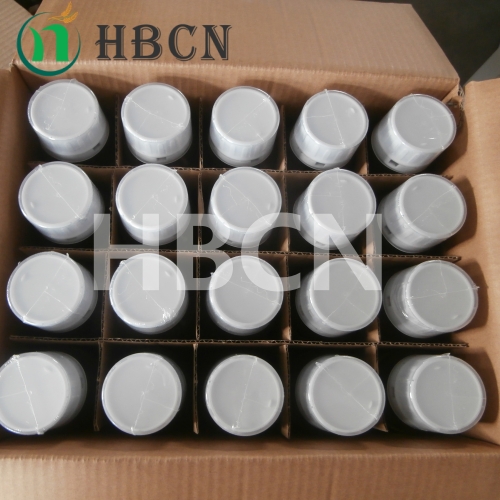
What it is and why it’s trending
Fluoxastrobin fungicide is a strobilurin (FRAC 11) that inhibits mitochondrial respiration (Qo site). In practice: fast protectant activity, good rainfastness, and that recognizable “stay-green” effect. It’s not magic—resistance stewardship is critical—but many customers say its performance on cereals, corn, soy, peanuts, rice, turf, and some fruit crops is reliably above mid-tier mixes, especially when timed preventively.
Product specification (key facts)
| Product Name | New Agricultural Pesticide Fungicide Fluoxastrobin |
| Active Ingredient | Fluoxastrobin fungicide (QoI, FRAC 11) |
| Typical Formulations | SC 250–500 g/L; WG 50–75%; FS 200–300 g/L |
| Purity (TC) | ≥95% a.i. (real-world use may vary by spec) |
| Mode of Action | Mitochondrial respiration inhibitor (cyt bc1, Qo site) |
| Shelf/Service Life | ≈2 years sealed at 0–30°C, dry storage; check batch COA |
| Compliance | Manufactured to ISO 9001/14001; CIPAC/FAO guidelines |
| Origin | No.1810 Tower B, Jinyuan Building, 152 Huai'an Road, Yuhua District, Shijiazhuang City, Hebei, China |
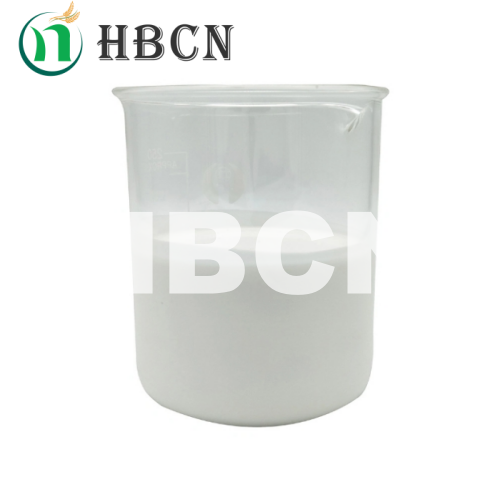
Process flow and QC (how it’s built)
- Materials: Technical fluoxastrobin fungicide (TC), high-purity solvents, non-ionic/anionic surfactants, dispersants, defoamers.
- Methods: Micronization (D50 ≈ 2–4 μm for SC), high-shear dispersion, homogenization, in-line filtration, nitrogen-blanketed filling.
- Testing standards: CIPAC methods for a.i., pH, viscosity, wet sieve, suspensibility; accelerated storage (54°C, 14 days); cold stability (0°C).
- Packaging: UN 3082-compliant options; SC in 1 L, 5 L, 20 L; WG in 1 kg, 5 kg, 10 kg.
- Service life: Real-world shelf stability verified by periodic retest and COA/GC trace.
- Industries served: Row crops, specialty crops, seed treatment, turf & ornamental.
Application scenarios and tips
Use preventively or at first sign of disease pressure. Typical rates hover around 50–150 g a.i./ha depending on crop, formulation, and label. Always rotate MoAs (e.g., mix or alternate with FRAC 3 or 7) to manage resistance. Actually, that’s where many slip up—don’t let FRAC 11s work solo season after season.
Advantages (from the field)
- Fast-acting protectant with visible greening and canopy hold.
- Good rainfastness and leaf surface coverage after proper spray quality.
- Flexible formulations (SC, WG, FS) for foliar and seed treatment programs.
Vendor comparison (what buyers ask me about)
| Factor | CNAGROCHEM | Generic Broker | Regional Distributor |
|---|---|---|---|
| MOQ | ≈500–1,000 L (SC) or 500 kg (WG) | Variable | Lower, but price premium |
| Lead Time | 3–5 weeks after PO/label approval | Uncertain | 2–4 weeks ex-stock |
| Customization | Private label, tailored solvents, droplet behavior tuning | Limited | Label only |
| Certifications | ISO 9001/14001; CIPAC-driven QC | Varies | Retail QA |
Case notes and feedback
2023 soy trials (grower-coordinated) showed 8–12% yield lift versus untreated under moderate Asian soybean rust—indicative, not definitive; conditions were favorable. A Midwest corn agronomist told me, “Coverage plus timing made the difference—disease stayed quiet.” On the flip side, a turf manager noted performance dipped when intervals were stretched beyond label; fair point.
Regulatory, safety, and testing
- Follow local labels; observe buffer zones and aquatic protection statements.
- QC includes a.i. assay, pH, viscosity, suspensibility, emulsion stability, and storage stability per CIPAC/FAO protocols.
- Resistance management per FRAC guidance: integrate with non-11 partners and limit total QoI applications per season.
Note: Specifications and performance can vary by batch, climate, water quality, and spray setup. Always check the registered label in your country.
References
- FRAC Code List 2024 – Fungicide Resistance Action Committee.
- FAO/WHO Manual on Development and Use of FAO/WHO Specifications for Pesticides.
- CIPAC Handbook & Methods for Pesticide Formulations (relevant MT tests).
- OECD Test Guidelines for chemicals (storage stability, phys-chem, ecotox).
- Public regulatory dossiers/labels for fluoxastrobin (e.g., EPA/EFSA summaries).
-
Imidacloprid Olefin – High-Performance Agricultural Pest Control Solutions from CN Agrochemical
NewsDec.09,2025
-
Comprehensive Guide to Imidacloprid Msds - Safe & Effective Pest Control Solutions from CN Agrochem
NewsDec.09,2025
-
Comprehensive Overview of Imidacloprid Mosquito Control for B2B Decision Makers
NewsDec.09,2025
-
Imidacloprid Mosquito: Effective & Sustainable Mosquito Control Solutions for B2B
NewsDec.09,2025
-
Effective Imidacloprid Mite Control for Industrial Agriculture
NewsDec.08,2025
-
Understanding Imidacloprid Mexico: Applications, Benefits & Environmental Impact
NewsDec.08,2025