

Sep . 29, 2025 22:15 Back to list
Terbuthylazine Herbicide: Selective, Long Residual Control?
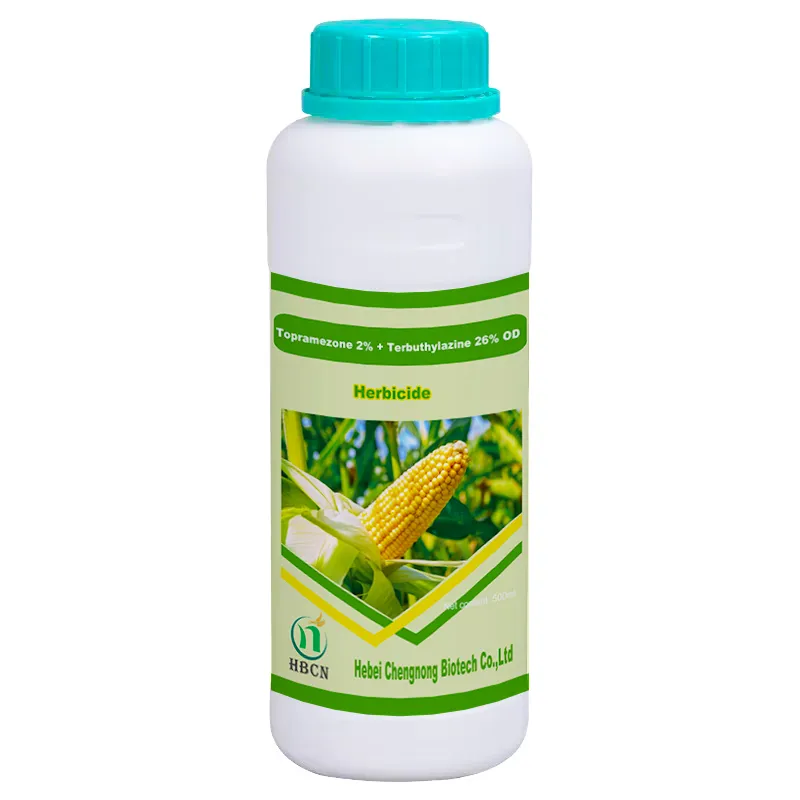
Topramezone 2% + Terbuthylazine 26% OD: a practical look at modern weed control
If you’ve been scanning the market for reliable pre- and early post-emergence options, you’ve likely come across terbuthylazine herbicide mixtures. This OD formulation blends 2% topramezone with 26% terbuthylazine to deliver broad-spectrum control in maize and related crops. To be honest, what stands out is the oily dispersion (OD) platform—less dust, strong adhesion, and usually steadier field performance after light rain.
Industry trends and where this fits
Two trends keep shaping herbicides: tank-mix simplicity and resistance management. Growers want one-pass convenience with multiple modes of action. This OD pairs an HPPD inhibitor (topramezone) with a triazine (the terbuthylazine herbicide portion), which is handy for managing tough grasses and broadleaf weeds. Actually, many customers say the formulation is more forgiving across water qualities and nozzle types than older ECs or WPs.
Technical specifications (snapshot)
| Parameter | Typical value | Notes |
|---|---|---|
| Active ingredients | Topramezone 2% w/w + terbuthylazine herbicide 26% w/w | Mixed formulation, OD (oily dispersion) |
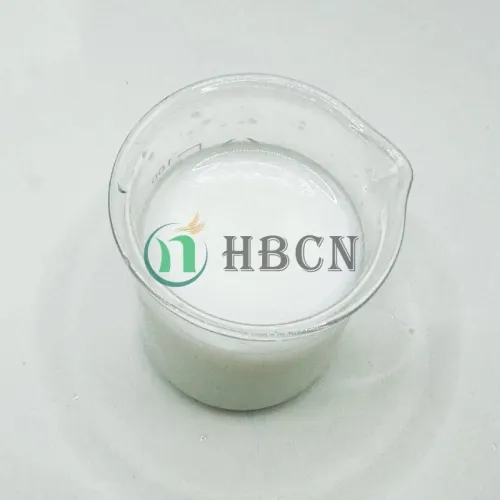
| Appearance | Homogeneous, low-viscosity suspension | No hard sediment after shaking |
| pH (1% dilution) | ≈ 6.0–7.5 | Per CIPAC guidance; real-world use may vary |
| Density (20°C) | ≈ 1.03 g/cm³ | For handling and dosing estimates |
| Shelf life | ≈ 2 years | Cool, dry storage, unopened |
Testing typically follows FAO/WHO and CIPAC frameworks: suspensibility (CIPAC MT 184), persistent foaming (CIPAC MT 47.3), accelerated storage 54°C/14 days (CIPAC guidance), and pH stability in hard water. Some suppliers also run cold stability (0–4°C) and viscosity checks because OD rheology affects sprayability.
Application scenarios and advantages
- Maize/corn: pre- to early post-emergence; robust on grass/broadleaf mixes.
- Sorghum and some sugar crops: check local labels; registrations differ by country.
- Conservation tillage: OD helps with coverage on residue.
Advantages we keep hearing: broad spectrum from dual modes of action, decent rainfastness, and surprisingly clean fields up to 4–6 weeks. One distributor reported 85–92% control of Echinochloa and Amaranthus at 21 DAA in side-by-sides, under moderate pressure. Of course, confirm your label and crop safety limits—the terbuthylazine herbicide rate cap can vary.
Process flow and quality
Materials: Topramezone TC (≥98%), terbuthylazine herbicide TC (≈97%), paraffinic/aromatic carrier oils, nonionic/anionic surfactants, dispersants, antifoam, stabilizers.
Methods: high-shear premix → media milling for particle size control → emulsification → QA sampling → packaging.
Testing standards: FAO/WHO specification principles, CIPAC methods for formulation quality; some vendors add OECD-referenced environmental fate tests for dossiers.
Service life: typically 24 months; batches are checked for phase separation and suspensibility post-storage.
Industries served: row-crop farming, custom applicators, input retailers, and integrators needing resistance-management tools.
Vendor comparison (indicative)
| Vendor | Certifications | Customization | QC Depth |
|---|---|---|---|
| CNAGROCHEM (Origin: No.1810 Tower B, Jinyuan Building, 152 Huai'an Road, Yuhua District, Shijiazhuang, Hebei, China) | ISO 9001/14001 (typical for exporters) | Label/pack sizes, adjuvant tweaks, dossier support | CIPAC-based batch release; stability program |
| Generic importer | Varies | Limited beyond packaging | Basic COA, fewer in-house tests |
| Local blender | May have ISO 9001 | High on pack/label; formulation changes on request | Good on-process controls; varying long-term stability data |
Customization options
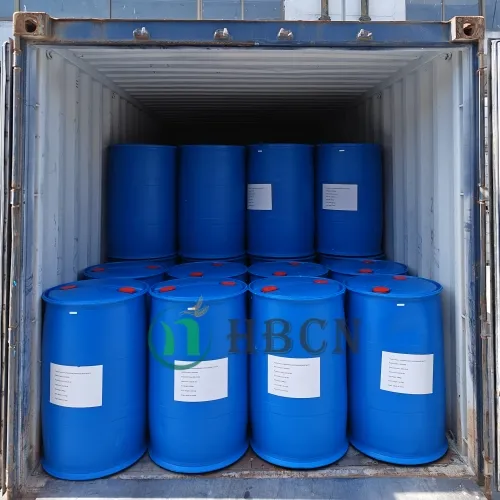
- Packaging: 200 mL to 20 L; UN-rated drums or HDPE as required.
- Adjuvant system: anti-foam level, wetters, and drift control adapted to local water.
- Registration dossiers: data bridging, CIPAC method alignment, label drafting.
Case notes and feedback
In Central Europe, a retailer trialed this OD in maize across five farms. Weed cover at 28 DAA dropped from ≈60% to ≈8–12% versus untreated, and growers liked the mix’s “easy rinse-out.” In another season with erratic rains, fields still held clean rows, which, I guess, speaks to the formulation holding on leaf surfaces. Always follow your local label—rates and PHIs for the terbuthylazine herbicide component differ across jurisdictions.
Authoritative citations
- EFSA. Conclusion on the peer review of the pesticide risk assessment of the active substance terbuthylazine. EFSA Journal. https://efsa.onlinelibrary.wiley.com
- FAO/WHO. Manual on development and use of FAO and WHO specifications for pesticides. https://www.fao.org
- CIPAC. Collaborative International Pesticides Analytical Council – Handbook and MT methods. https://www.cipac.org
- OECD Series on Pesticides: Guidance for registration of pesticide formulations. https://www.oecd.org/chemicalsafety/pesticides-biocides/
-
Imidacloprid Olefin – High-Performance Agricultural Pest Control Solutions from CN Agrochemical
NewsDec.09,2025
-
Comprehensive Guide to Imidacloprid Msds - Safe & Effective Pest Control Solutions from CN Agrochem
NewsDec.09,2025
-
Comprehensive Overview of Imidacloprid Mosquito Control for B2B Decision Makers
NewsDec.09,2025
-
Imidacloprid Mosquito: Effective & Sustainable Mosquito Control Solutions for B2B
NewsDec.09,2025
-
Effective Imidacloprid Mite Control for Industrial Agriculture
NewsDec.08,2025
-
Understanding Imidacloprid Mexico: Applications, Benefits & Environmental Impact
NewsDec.08,2025