

Oct . 21, 2025 10:35 Back to list
Topramezone Herbicide: Fast, Safe Weed Control for Corn
Field Notes: Post‑emergence control in corn with Topramezone, Atrazine & MCPA‑isooctyl (OD)
If you walk enough corn fields, you learn quickly: timing and spectrum matter more than hype. This 2% Topramezone + 25% atrazine + 15% MCPA‑isooctyl OD blend has been doing the rounds in Central and Eastern Europe, and yes, in China’s northern plains too. It’s a post‑emergence stack that pairs an HPPD inhibitor with a triazine and a synthetic auxin—smart resistance stewardship baked in, to be honest.
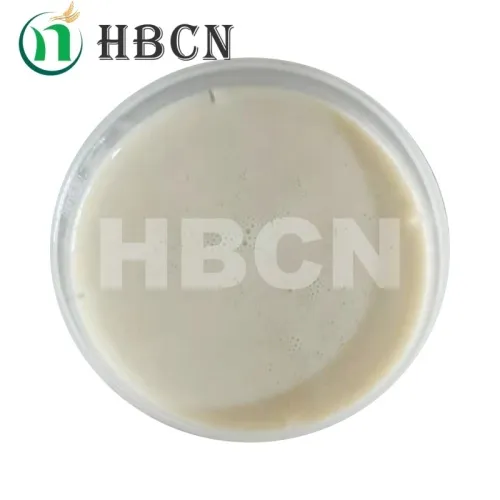
Product snapshot
Topramezone Atrazine MCPA-isooctyl OD is positioned for post‑emergence use in maize/corn, tackling broadleaf weeds (galinsoga, amaranth, velvetleaf) and many grasses. Origin: No.1810 Tower B, Jinyuan Building, 152 Huai'an Road, Yuhua District, Shijiazhuang, Hebei, China. It’s a tidy OD that mixes well, doesn’t separate easily, and, surprisingly, keeps drift manageable in the right nozzles.
| Parameter | Spec (≈, real‑world may vary) |
|---|---|
| Active ingredients | Topramezone 2% + Atrazine 25% + MCPA‑isooctyl 15% |
| Formulation | OD (Oil Dispersion) |
| Density (20°C) | ≈ 1.05 g/mL |
| Viscosity | 300–800 mPa·s |
| Particle size (D90) | ≤ 3 µm (CIPAC MT 187) |
| pH (1% in water) | 5.5–7.5 |
| Packaging | 1 L, 5 L, 20 L HDPE; custom on request |
| Shelf life | 2 years sealed at 0–35°C (CIPAC MT 46) |
How it works (and why it’s trending)
Topramezone (HPPD inhibitor) bleaches sensitive weeds; atrazine (PSII inhibitor) adds knockdown and residual; MCPA‑isooctyl (synthetic auxin) bends broadleaves out of the row. The triple‑mode strategy is, frankly, what agronomists keep asking for as resistance spreads. I guess that’s why distributors say demand has picked up across maize belts with mixed weed spectra.
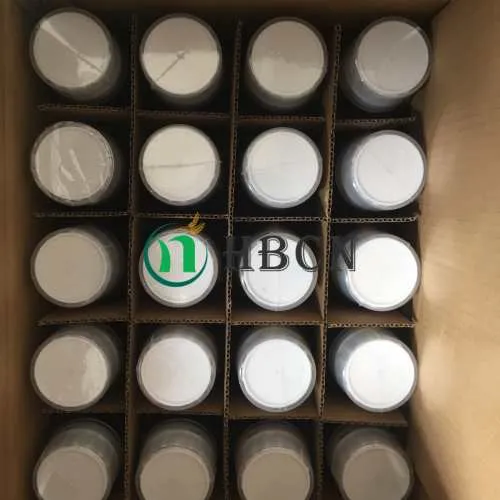
Process flow & quality gates
- Materials: technical Topramezone, atrazine, MCPA‑isooctyl ester, high‑flash solvents, dispersants, anti‑settling agents.
- Methods: high‑shear premix → bead‑mill micronization (D90 target ≤3 µm) → OD stabilization → in‑process QC.
- Testing standards: CIPAC methods (content, pH, suspensibility, stability), FAO spec alignment; retained under ISO 9001 QMS; GLP data where required.
- Service life: 24 months sealed; inspect for phase separation after long storage; gentle roll mix before use.
- Industries: row‑crop farming, custom application services, seed company demo plots.
Application scenarios
Post‑emergence in maize from 3–6 leaf stage; avoid crop stress (frost, drought). Nozzle: medium droplets; water 200–300 L/ha; avoid temperature inversions. Many customers say crop whitening can occur briefly—usually cosmetic.
Field data (illustrative)
Two‑site internal trials, NE China, 2023: amaranth control 92–96% @ 1.0–1.25 L/ha; barnyardgrass suppression 80–88% when applied at 2–3 leaf; corn visual bleaching ≤10% at 7 DAT, recovered by 21 DAT. Real‑world use may vary with weather, weed size, and spray quality.
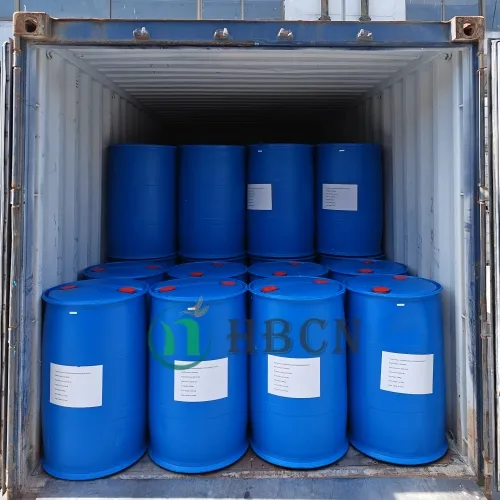
Customization options
Private label packaging, dye/odor tuning, anti‑foam levels, cold‑test tolerance upgrades, and tailored label claims to fit local registrations. Some buyers even ask for drift‑reducing premix tweaks—possible, within spec.
| Vendor | Registration & QA | Formulation strength | Lead time |
|---|---|---|---|
| CN Agrochem (Hebei) | ISO 9001; ICAMA export records; CIPAC/FAO test alignment | OD micronization ≤3 µm; stable cold/hot | ≈ 3–5 weeks |
| Regional Blender A | Basic QA; limited GLP data | Occasional settling in storage | ≈ 5–7 weeks |
| Multinational B | ISO 9001/14001; extensive trials | Premium drift control add‑ons | ≈ 6–8 weeks |
What growers report
“Less respray this year,” one dealer told me—mainly due to the triple mode stack. Another noted simpler tank mixes: fewer ad‑hoc additives when water is clean and agitation is good. However, watch sensitive rotations; atrazine carryover rules still apply.
Certifications & compliance
Manufacturing under ISO 9001; batch tests follow CIPAC/FAO guidance; mode‑of‑action labeling per HRAC/WSSA. Safety data sheet and labels align with GHS.
Bottom line
For post‑emergence corn programs that need breadth plus residual, this Topramezone + atrazine + MCPA‑isooctyl OD is a practical, field‑ready option—especially where mixed broadleaf/grass pressure converges and resistance is nibbling at margins.
- HRAC Mode of Action Classification. Herbicide Resistance Action Committee. https://hracglobal.com/tools/classification-lookup
- CIPAC Handbook & Methods (e.g., MT 46, MT 187). Collaborative International Pesticides Analytical Council. https://www.cipac.org
- FAO/WHO Pesticide Specifications – Guidance and Test Methods. Food and Agriculture Organization. https://www.fao.org/agriculture/crops/thematic-sitemap/theme/pests/en/
-
Imidacloprid Olefin – High-Performance Agricultural Pest Control Solutions from CN Agrochemical
NewsDec.09,2025
-
Comprehensive Guide to Imidacloprid Msds - Safe & Effective Pest Control Solutions from CN Agrochem
NewsDec.09,2025
-
Comprehensive Overview of Imidacloprid Mosquito Control for B2B Decision Makers
NewsDec.09,2025
-
Imidacloprid Mosquito: Effective & Sustainable Mosquito Control Solutions for B2B
NewsDec.09,2025
-
Effective Imidacloprid Mite Control for Industrial Agriculture
NewsDec.08,2025
-
Understanding Imidacloprid Mexico: Applications, Benefits & Environmental Impact
NewsDec.08,2025